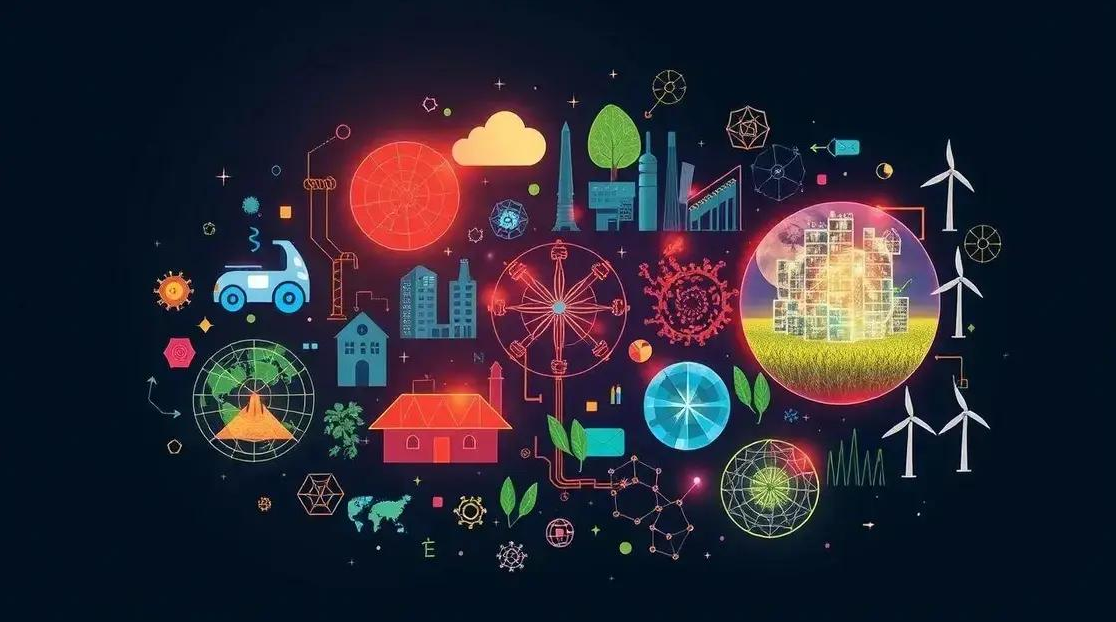
AI Trends 2026: 5 Innovations Reshaping the Future of Technology
By: Pedro Batista on July 20, 2026
Última atualização em: julho 21, 2026
AI Trends 2026: The Complete Guide to Technology’s Next Big Shift
AI trends 2026 span personalization, robotics, cybersecurity, autonomous vehicles, NLP, and sustainability — reshaping how industries operate while raising real ethical questions that businesses can’t afford to ignore.
Artificial intelligence has become one of the biggest forces driving digital transformation across industries worldwide. As it works its way deeper into business processes and everyday applications, AI trends 2026 are reshaping technology as we know it. Innovations in machine learning, natural language processing, and cognitive computing are all set to demonstrate real transformative potential across sectors.
Right now, AI is boosting productivity while also delivering the kind of data insight that’s become essential for good decision-making. As technology keeps accelerating, AI systems are growing more capable of handling genuinely complex tasks. Looking at AI trends 2026 specifically, expect continued emphasis on innovation, efficiency, and better user experiences across every platform — with demand for AI-driven applications only climbing higher.
Importantly, these trends reach well beyond simple automation. Healthcare, finance, education, and transportation are all being reshaped in real time. In healthcare, for example, AI is enabling more accurate diagnoses and personalized treatment plans through predictive modeling, while finance leans on AI for fraud detection, risk assessment, and better customer service. For broader context on how U.S. policy is approaching AI oversight, the National Institute of Standards and Technology’s AI resources offer a useful starting point.
Ultimately, rapid AI advancement signals a shift toward a more automated, data-driven world. Staying informed and adaptable will be essential for anyone hoping to make the most of what’s coming.
Personalization: One of the Most Visible AI Trends 2026
As 2026 approaches, AI is becoming central to personalization across retail, healthcare, and entertainment alike. Predictive analytics sits at the core of this shift, analyzing huge amounts of data to anticipate customer behavior and preferences.
Retail gets smarter recommendations
AI-driven recommendation systems are now standard in retail, examining past purchases and browsing history to suggest genuinely relevant products. This boosts both sales and customer loyalty, while also powering more effective targeted marketing.
Healthcare personalizes treatment
Meanwhile, healthcare is using machine learning to predict patient risk and outcomes with much greater accuracy, letting physicians build treatment plans tailored to individual health profiles.
Entertainment keeps viewers engaged
Streaming platforms, similarly, use AI to recommend content based on viewing habits — a personalization trend that keeps audiences coming back for more of what they actually enjoy.
Altogether, this points toward one of the clearest AI trends 2026: deeper personalization that’s steadily redefining consumer expectations.
AI-Powered Robotics: A Major Force Among AI Trends 2026
As we approach 2026, AI-driven robotics is transforming how tasks get done across industries. Better machine learning and stronger computational power are giving robots a level of adaptability once reserved for human expertise.
Manufacturing gets an upgrade
In industrial settings, robots equipped with advanced sensors now handle complex assembly, quality inspection, and warehouse logistics with minimal human input. Automated guided vehicles, for instance, use real-time data to optimize inventory management — cutting costs while boosting productivity.
Service industries are changing too
In healthcare, robots now assist in surgery, monitor patients, and even deliver medication — learning from interactions to improve workflows over time. Meanwhile, hospitality is using robots for cleaning, room service, and concierge tasks, freeing up staff for the interactions that actually need a human touch.
Overall, robotics driven by AI is shaping a more autonomous, efficient landscape as 2026 approaches.
AI in Cybersecurity: A Double-Edged Sword Among AI Trends 2026
AI has genuinely transformed how organizations detect and respond to cyber threats, spotting patterns far faster than traditional methods allow.
Faster, smarter threat detection
Machine learning lets security teams identify potential vulnerabilities quickly, adapting continuously as it learns from past incidents — a real advantage against increasingly sophisticated attacks, including zero-day exploits.
The flip side: AI-powered attacks
However, cybercriminals are using the same technology for harm — automated phishing, deepfakes, and manipulated AI algorithms are all becoming more common. As a result, organizations need to stay ahead of threats that specifically target AI vulnerabilities.
This duality is exactly why robust countermeasures — ongoing training, updated detection systems, and a real commitment to ethical AI use — remain essential heading into 2026.
Autonomous Vehicles: A Transportation-Focused Look at AI Trends 2026
Autonomous vehicle technology represents one of the more visible AI trends 2026, with AI expected to play a bigger role in both functionality and safety.
Better decision-making on the road
AI-based systems are improving how vehicles interpret surroundings and react to hazards, pushing accuracy well beyond what’s been possible before.
Smarter traffic management
Beyond safety, AI is set to improve traffic flow itself — vehicles communicating with each other and with traffic signals to optimize routes and reduce congestion, supported by real-time data.
Personalized travel experiences
Looking further ahead, vehicles may start adapting to individual habits and schedules, transforming how people think about transportation altogether. Public acceptance is expected to grow as safety, emissions, and mobility benefits become clearer.
NLP Innovations Driving AI Trends 2026
Natural Language Processing has advanced significantly, reshaping how people interact with machines and making AI trends 2026 feel more conversational than ever.
Virtual assistants get smarter
Virtual assistants have evolved from simple task execution into genuinely conversational agents, capable of understanding nuance, recognizing dialects, and anticipating what users actually need.
Translation gets more accurate
Meanwhile, machine learning models have sharply improved translation accuracy and fluency, preserving tone and context across languages — a major win for cross-border business communication.
Customer support becomes more personal
NLP-powered chatbots are now standard in customer support, resolving inquiries efficiently while still keeping interactions feeling personalized.
Ethics still need attention
That said, NLP’s potential comes with real responsibility — biased algorithms and data privacy concerns need careful management to keep the technology’s growth equitable.
AI and Sustainability: The Green Side of AI Trends 2026
The intersection of AI and environmental sustainability is opening real opportunities for green technology, with AI increasingly used to boost energy efficiency and cut waste.
Smarter energy use
Smart grids powered by AI can predict energy demand and adjust distribution in real time, using data from sensors and smart meters to reduce waste in homes, businesses, and cities. AI is also helping optimize solar and wind production by analyzing weather patterns.
Reducing waste through better sorting
AI-powered computer vision is improving recycling by accurately sorting materials, supporting a stronger circular economy. Predictive analytics is also helping businesses manage supply chains more efficiently, cutting excess inventory.
Fighting climate change directly
From precision agriculture that reduces water and chemical use to advanced climate modeling that predicts environmental shifts, AI is proving to be a genuinely useful tool for climate adaptation. For more on how these applications are evolving, see our deep dive on AI and green technology.
Ethical Considerations Behind AI Trends 2026
Rapid AI advancement brings real ethical questions that need direct attention as adoption spreads across healthcare, finance, and law enforcement.
Bias in training data
AI systems can reflect historical inequality or societal bias if trained on flawed data, leading to unfair treatment of specific groups. Addressing this requires thorough audits of training datasets and a real commitment to fairness and transparency.
Privacy remains a core concern
Since AI applications often rely on massive amounts of personal data, strong data protection and clear communication about how that data is used remain essential.
Regulation is catching up
Finally, proper legislative frameworks — covering ethics, accountability, and safety — will play a critical role in managing AI’s risks. Ongoing collaboration between technologists, ethicists, lawmakers, and the public is essential to get this right. For more detail on current regulatory approaches, check our guide to AI regulation policy.
The Bottom Line on AI Trends 2026
Looking back across everything covered here, it’s clear that AI trends 2026 are reshaping technology across nearly every sector. From machine learning advances to AI woven into daily applications, these trends prove just how much technology continues to drive real innovation.
One key takeaway: AI adoption keeps accelerating, becoming more embedded in business strategy, particularly in the U.S. Companies increasingly rely on AI to sharpen decision-making, streamline operations, and improve customer experience — implications that reach well beyond simple automation.
At the same time, AI’s potential to reshape not just business but broader societal structures means stakeholders need to stay alert. Ethical considerations and responsible AI frameworks matter more than ever, and collaboration between individuals, organizations, and governments will be key to shaping policy that supports innovation while addressing real risk.
Staying informed and engaged with AI trends 2026 is the best way to prepare for the societal shifts this technology is already setting in motion.
Pedro Batista Holds a degree in Communication with a specialization in Digital Marketing strategies. Working as a writer, he creates well-researched content, transforming complex information into accessible and engaging articles for a wider audience.